
Messages
Message from the 36th General Chairperson
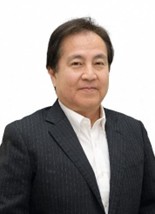 General Chairperson Kimiya KOMURASAKI
The 36th International Symposium on Space Technology and Science (ISTS) will be held from July 17 to 23, 2027, in Toyama City, Toyama Prefecture, Japan. Toyama's manufacturing industry has been developed, inheriting a variety of manufacturing traditions and forming an industrial cluster with high technology and unique characteristics, and has the potential to be the future of space manufacturing. In addition, Toyama is a city full of tourist attractions, having been ranked number one in Japan by the New York Times in its list of "52 places to visit in 2025." You will be impressed by the delicious seafood and local cuisine, the hospitality of the people at your accommodation and restaurants, and after the conference you can take a short trip to enjoy the World Heritage Site of Shirakawa-go, the old townscape of Hida Takayama, Kurobe Dam, Kenrokuen Garden and Higashi Chaya District in Kanazawa. We are pleased to welcome you to such an attractive venue.
ISTS has provided a forum for space-related engineers, researchers, companies, government agencies, and other stakeholders to gather together to present their latest achievements, exchange their perspectives and initiate collaborations. This symposium marks the 36th time it has been held since its first event in 1959, and the number of papers presented was 550 in 2025. The symposium scope keeps expanding as: Chemical Propulsion and Air-breathing Engines, Electric and Advanced Propulsion, Materials and Structures, Astrodynamics, Navigation Guidance and Control, Fluid Dynamics and Aerothermodynamics, Small Satellite, Space Transportation, Microgravity Sciences and Technology, Thermal Control, Satellite Communications, Broadcasting and Navigation, Human and Robotic Space Exploration, Sounding Rocket, Balloon and Flight Experiment using Small Flight Vehicle, Earth Observation, Space Power Systems, Space Environment and Debris, Systems Engineering and IT, Space Education and Outreach, Space Law, Policy and International Cooperation, Safety and Mission Assurance.
However, as the symposium expands in scale and the number of participants increases, the number of parallel session rooms will exceed ten, raising concerns that participants will become isolated in their own specialized fields, creating an “Octopus pod” or "trap pod" situation. Therefore, we will devise a system that allows participants to leave their specialized sessions once a day and discuss topics from a broader perspective. In this symposium, under the theme of "Stay Creative, Stay Innovative," participants will share their cutting-edge challenges in a variety of fields, and this time we will particularly discuss the application of AI and quantum technologies to space, which have seen remarkable developments in recent years. Furthermore, in order to promote cross-disciplinary exchanges that will be the source of new space businesses amid the explosive expansion of space utilization, we will proactively plan a special session such as the one focusing on "the Moon" and other interdisciplinary joint sessions that will spark innovation.
In closing, I would like to express my deepest gratitude to the sponsoring organizations and all those involved and ask for your valuable support and cooperation to make this event a fruitful one.
We look forward to seeing many of you at the 36th ISTS.

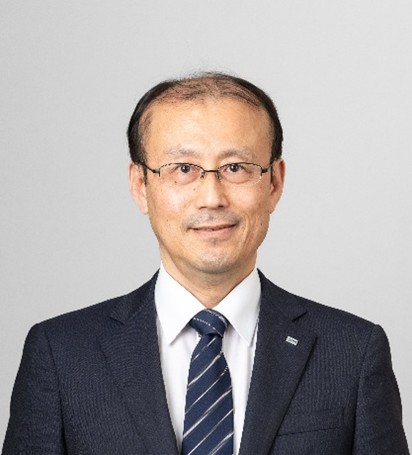 Chair of the program committee Noriyasu INABA
Here in Toyama, the distance from mountains rising over 3,000 meters to the seabed of Toyama Bay, which exceeds 1,000 meters in depth, is only about 100 kilometers—a globally rare and strikingly steep natural landscape.
In winter, moist winds crossing the Sea of Japan from the continent bring heavy snowfall to the high mountains. The mineral-rich meltwater from these mountains nourishes fertile rice fields and the diverse ecosystems of the deep bay, forming the foundation of Toyama’s rich food culture.
Since the 14th century (Muromachi period), traditional craftsmanship in sculpture and metal casting, encouraged and fostered by leaders of the time, has flourished. These arts combined the meticulous and diligent labor of citizens during the agricultural off-season with abundant electricity from hydropower, and have been inherited and developed to this day.
It is said that the famous pharmaceutical trade originated in the Edo period as an ingenious way to support finances strained by floods in steep rivers. The modern glass manufacturing culture, which began with medicine bottles, has embraced the flow of contemporary art and is becoming a new cultural hallmark of the region with global influence.
Human culture and history, I believe, are born from the activities of people living on the land, sharing wisdom to enjoy the blessings of the natural environment.
Today, space development and utilization around the world are accelerating rapidly. In addition to the growing efforts to enrich life on Earth through information from space, we are beginning to see the potential for using the infinite resources, energy, and space that the cosmos offers.
By harnessing humanity’s boundless imagination, we can expect infinite value to emerge from the infinite universe.
Under the slogan “Stay Creative, Stay Innovative,” we sincerely hope that at the 36th ISTS held here in Toyama, new technologies will meet new values, and a strong relationship will be built toward creating a new cultural frontier in space.